
My new book, The Price of Becoming, is a USA Today, LA Times, Success Magazine, and Publishers Weekly Best-Seller! I think you’ll find it useful.
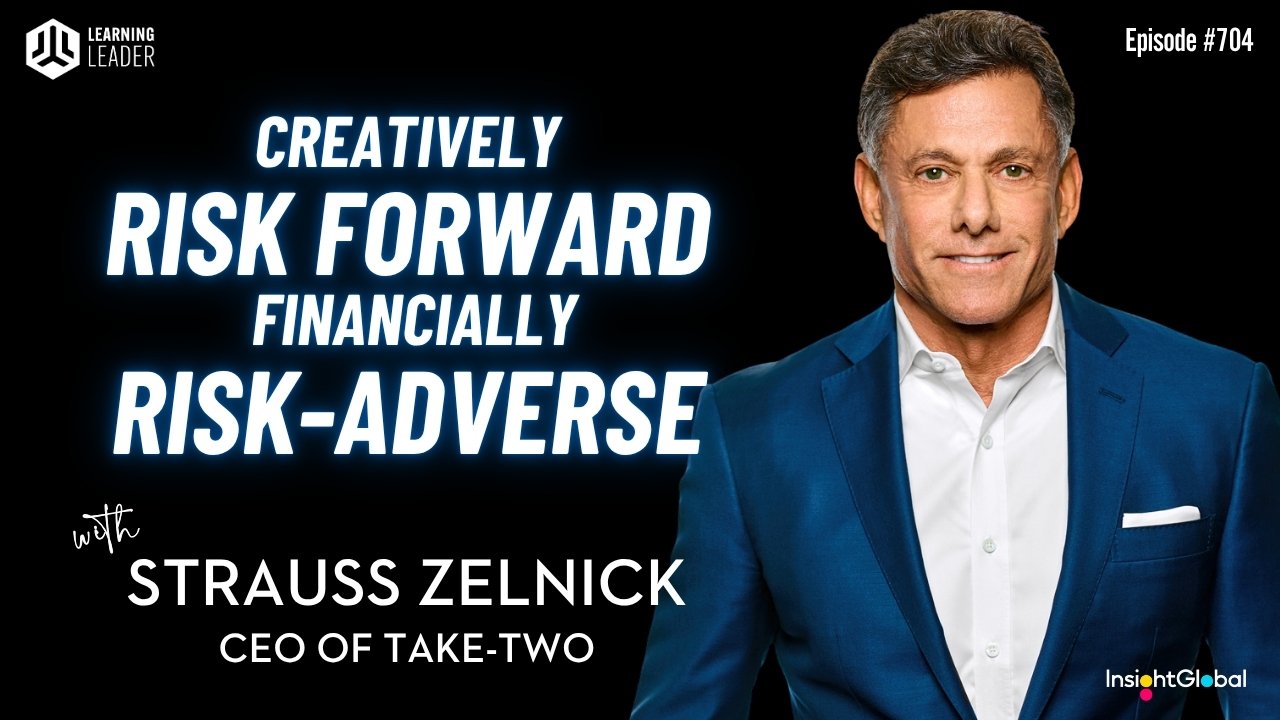
Strauss Zelnick is the Chairman and CEO of Take-Two Interactive… The company behind Grand Theft Auto and NBA 2K. He also runs ZMC, the private equity firm he founded in 2001. Before that, he was President of 20th Century Fox at 32, CEO of BMG Entertainment, and the executive who greenlit Dirty Dancing. He holds an MBA and JD from Harvard.
You can also WATCH our conversation on YouTube.
This is brought to you by Insight Global. If you need to hire one person, hire a team of people, or transform your business through Talent or Technical Services, Insight Global’s team of 30,000 people around the world has the hustle and grit to deliver.
Be part of “Mindful Monday” — Text Hawk to 66866
Key Learnings
All the greats have a coach. Strauss is one of the most disciplined humans alive, and he has had one since he was 30. His argument: Tom Brady is an amazing athlete, but would he have performed as well with no coach, or a lousy one?
A great coach is objective, encouraging, smart, and experienced. They warn you of obstacles you can’t see yet.
Strauss doesn’t want the Socratic method from his coach. He wants direct advice. He’ll use questions when he’s leading others. But when he brings a problem to his own coach, he wants to be told: “You have that wrong; you’re missing this.”
So What? Strauss was avoiding a confrontation because he knew the other person would be really upset. His coach said, “So what?” He had the conversation. The person was upset. They got to the other side, and it was better than leaving it out there.
Bad news doesn’t get better with age.
The most effective people are the most open-minded and self-critical. The ones who insist they don’t need a coach are usually the ones losing.
“Arrogance is the enemy of continued success.”
Humility isn’t pretending you’re not good. Strauss says claiming he’s bumbling through the job would be silly, and he’s proud of what he does well. The humility is in staying open. His team’s description of him: strongly held opinions, freely shared, and a mind that changes when the facts do.
“You’re just a terrible speaker.” Strauss was 31, newly president of Vestron, and had written an eloquent after-dinner speech he was proud of. He read it off the page. His boss pulled him aside afterward and told him it was terrible.
What two days of media training taught Strauss:
- Talk about what the audience cares about, not what you want to say
- Never deliver a written speech unless you’re President of the United States
- Inject your personality
- Try to make them laugh
Be of service to the audience. Strauss opens his class at MIT Sloan by asking the students why they came and what they want out of it. It surprises them every time, because speakers never ask.
One meeting with 20 people beats 20 meetings with one person. A young CEO Strauss coaches was sleeping four hours a night and spending 20 hours a week on one-on-ones. Strauss told him to do one weekly meeting with all 20.
Delegate with information. Everyone running a group is in the same room once a week and shares everything, including the problems. If it’s business, it goes in the room. If it’s personal, they can talk one-on-one. Politics shrink because nobody has information nobody else has.
Happy stuff doesn’t reach the CEO’s desk. If it landed on his desk, it’s either bad or genuinely complex. That’s the system working.
Align the words with the dollar signs. Mission, strategy, culture, and compensation all have to point in the same direction. Say you want to be the best in the world while paying people regardless of performance, and they will follow the money every time.
The worst comp structure is CEO discretion. It builds a culture where everyone is trying to please one person, and people think pleasing someone means telling them what they want to hear.
Hire the most talented people on earth, then support them through thick and thin. Strauss greenlit Dirty Dancing at Vestron on a $5.5 million budget. The first-time director was too scared to speak, so the team pitched it. They claimed the film would change how women dressed, produce an award-winning soundtrack, and win an Oscar. Strauss thought the pitch was nonsense. He didn’t even like the script. He greenlit it anyway because he trusted the team over his own judgment. It became the biggest independent hit of all time to that date, a record it held until The Blair Witch Project.
Be a good judge of talent, not of products. Knowing which one you are is the whole thing.
Leave the escape hatches open. When competitors poured hundreds of millions into VR and the metaverse, Strauss said no. But Take-Two did enough experimentation to move fast if he was wrong, and got paid for every VR project they took on. They lost nothing on the wrong bet.
Be creatively risk-forward and financially risk-averse. A well-run film studio had a 30 percent hit ratio, meaning 70 percent of what it released broke even or lost money. So you build the balance sheet first, then take the creative swings. “If you can’t afford to lose, you don’t play the game.”
Carl Icahn won because he was a good poker player with a huge stack of chips. When things went against him, he didn’t sit around moaning. He went to the next game.
At 68, he’s up at 4:45 and in the gym by 6:45, often twice a day. Looking your best is a form of respect for other people and for yourself. If you look sloppy and out of shape, it’s harder to lead. The other half is simply feeling good enough to show up with energy and a smile.
He refuses to hold anyone else to his own personal standard. Everyone is on their own journey, and he doesn’t want clones. Thirty minutes of walking five days a week is genuinely good for you. That person is showing up for themselves too.
No AI slop in Grand Theft Auto. Take-Two builds handcrafted, building by building. Their teams will use state-of-the-art tools to do great work more efficiently. What they won’t do is push a button on someone else’s model and call the output theirs.
“That’s yesterday’s headlines.” Strauss’s father-in-law’s answer whenever anyone congratulated him. Take-Two doesn’t do the who’s-better-than-us party. They show sincere appreciation for great work, and then they get up the next morning and do it again.
Reflection Questions
- Who is the person in your life who will tell you that you have it wrong?
- What is the confrontation you’re avoiding right now, hoping it resolves itself? Have that conversation today.
- Where are you taking real risk without the balance sheet to survive being wrong? And where are you so protected that you aren’t taking any risk at all?
More Learning
- #662: Nick Thompson – Move at an Uncomfortable Pace
- #626: Rob Kimbel – The Power of Grit and Generosity
- #525: Frank Slootman – Raise Your Standards & Push the Pace
Podcast Chapters
00:00 Apply for the Learning Leader Circle
01:01 Meet Strauss Zelnick
03:00 President of Fox at 32
06:15 He Greenlit Dirty Dancing and Thought It Would Flop
09:55 How He Finds Talent
11:30 Align the Words With the Dollar Signs
18:56 One Meeting With 20 People
22:33 Up at 4:45, Gym by 6:45
26:20 No AI Slop in Grand Theft Auto
27:55 Why He Doesn’t Feel Lonely at the Top
28:53 His Coach’s Advice Was “So What?”
29:51 Every Great Leader Has a Coach
32:37 Direct Advice, Not the Socratic Method
35:31 What He Teaches at MIT Sloan
37:03 “You’re Just a Terrible Speaker”
39:27 Arrogance Is the Enemy of Continued Success
41:03 Why He Said No to VR
43:52 Creatively Risk-Forward, Financially Risk-Averse
47:20 That’s Yesterday’s Headlines
49:51 EOPC
Leave A Comment