
My new book, The Price of Becoming, is a USA Today, LA Times, and Publishers Weekly Best-Seller! I think you’ll find it useful.
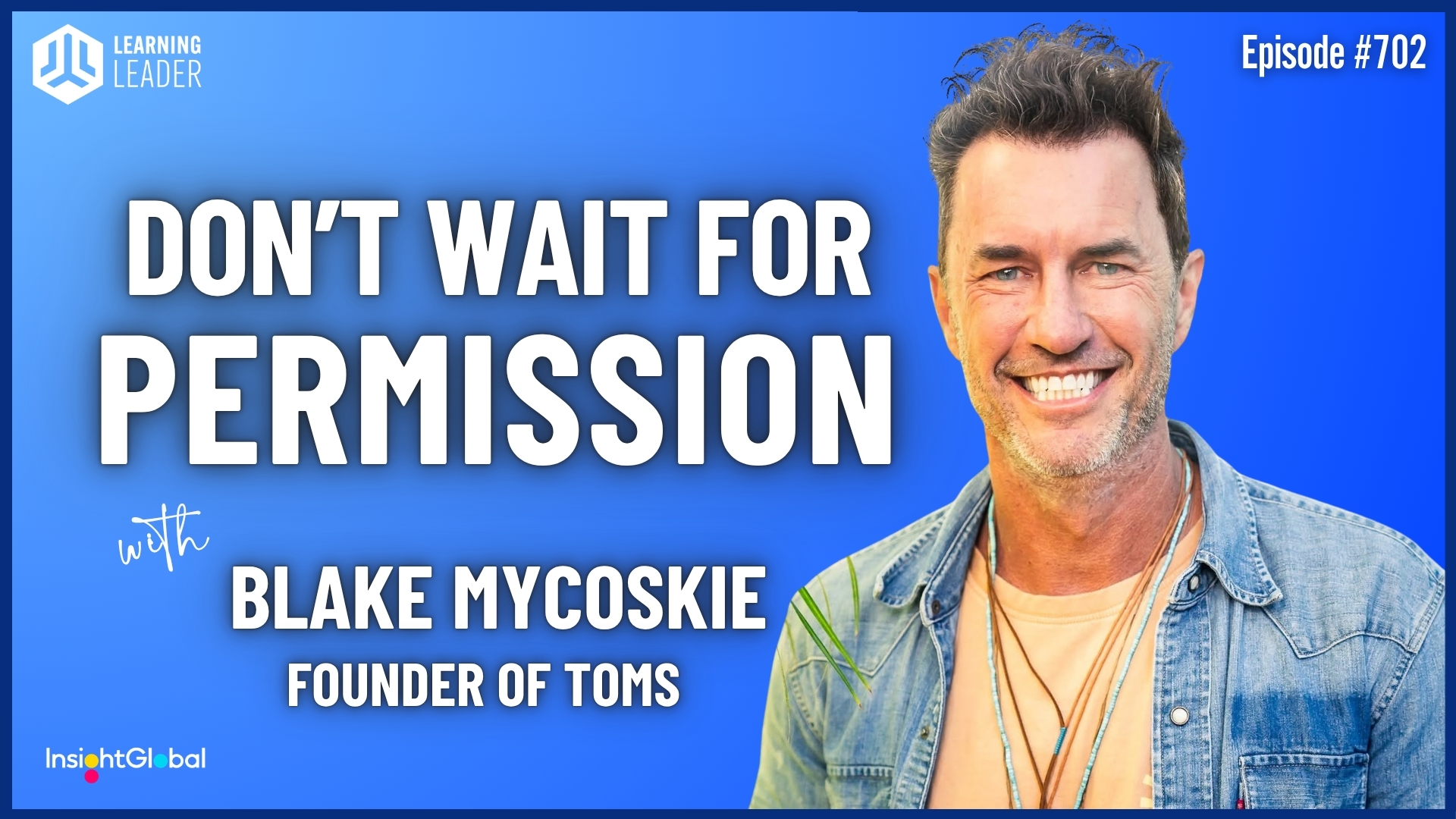
Blake Mycoskie founded TOMS Shoes in 2006 after a trip to Argentina, where he saw children without shoes and built a company around giving away a pair for every pair sold. TOMS went on to donate more than 100 million pairs of shoes and became one of the most copied business models in the world. What most people don’t know is what happened after he sold it, and I’m grateful that he was open to talking about that on this episode of The Learning Leader Show.
You can also WATCH our conversation on YouTube.
This is brought to you by Insight Global. If you need to hire one person, hire a team of people, or transform your business through Talent or Technical Services, Insight Global’s team of 30,000 people around the world has the hustle and grit to deliver.
Be part of “Mindful Monday” — Text Hawk to 66866
Key Learnings
Make your gratitude specific. Not “I’m grateful for my family.” Name the exact thing. Blake’s example from that morning: the photos the camp posted of his daughter laughing in the lake, and knowing his stoic kid does not smile like that unless she is genuinely happy.
He kept the practice going for five years when he couldn’t feel any of it. Blake could not name five things he was grateful for, and he had all the same things in his life he has now. He did it anyway. He credits it as one of the things that kept him going.
Surfing is a great thinking practice. Surfing is mostly just sitting on the board. Three hours in the water, ten waves, maybe five minutes standing. The rest is paddling and sitting. That’s why it works as a thinking practice.
Capture the idea in the moment or lose it. Blake programmed the side button on his Apple Watch to open a voice memo. Every idea he has sitting on the board, he records. They’re all waiting when he gets out.
He hit every marker and still felt worthless. “I did everything, and I still, deep down in my soul, had this feeling like I’m not worthy, I’m not enough, and I never will be.”
The external validation was the drug. Selling TOMS cut off the supply. The thing that had been holding up his sense of self was suddenly gone.
If you get there and it’s empty, don’t panic. Panicking is what Blake did, and having money meant he could make expensive mistakes fast. Build the dream house. Get divorced. One thing after another.
The emptiness may be the point. Blake’s read on it: if achievement delivered what society promises, you’d never go inward. Feeling hollow at the summit is what forces the inner work.
He re-patterned the sentence he’d been telling himself since childhood. The old one was “you’re not enough.” He replaced it with “I am enough. I’ve always been enough.” Twenty minutes every morning and every evening. Forty straight days. It worked, and he no longer needs to do it daily.
Sometimes you just need a physical cue to catch the loop. That’s the whole idea behind the bracelet he wears. Not magic. A reminder on your wrist that interrupts the thought.
Give the second one away. Blake found the bracelet’s real power was handing one to a friend. Now you’re both wearing it, you’re both in on it, and there’s an unspoken agreement that neither of you has to have a bad day alone. Men are worse at building that than women are.
Tell your kids they’re enough, and keep telling them. They’re going to get the opposite message from everywhere else, which is exactly why it has to come from you repeatedly. Blake says the relaxation you’ll see in them is immediate.
Be brutally honest about how hard the job is. Try to talk them out of it. Blake is the last interview in the process now. If he can lay out every negative and they still desperately want it, the commitment is real.
“How many people did you convince not to take the role before you got the right person?” Most leaders slip into sales mode, talk the candidate into it, and end up talking themselves into the candidate.
What he screens for during the interview process:
- Integrity first. If it isn’t there, it surfaces fast now.
- Attitude second. The person who never says “that’s not my job.”
- Whether they’re building a resume or joining a movement.
Find the people who cover what you’re bad at. Blake is a storyteller, a vision-sharer, and high energy. He is not a supply chain guy, not a finance guy, and he has trouble saying no. So he hired around it. That’s what let him actually be the chief shoe giver instead of pretending to be a CEO.
Don’t wait for permission. Most people stand in line at the front door. Blake looks for side doors. In Argentina he had no investors and no plan, just an idea and the words One For One. Ryan’s version for his kids: everyone can apply online. Drive to the restaurant and go talk to the manager instead.
Having no experience was the advantage. He’d never made a shoe, so he didn’t know which rules he was breaking. Same with outdoor advertising. Same with driver’s ed. He learned it from Richard Branson: ask forgiveness, not permission.
Nashville wouldn’t allow advertising, so he sold art instead. Blake spent two years with the city council and got there by removing the ad from the ad. No price, no call to action. Just album covers on the sides of buildings, called country music art. Once one artist had one, they all wanted one. He sold the company to Clear Channel.
You don’t attract what you want. You attract what you are. Want honest friends, be honest. Want peace at home, bring peace. Want trust, practice it when nobody’s watching. Blake applies it to customers too: sloppy companies attract sloppy customers, and that’s usually the real reason the business fails.
Charlie Munger got asked how to get a great wife. He said: deserve one.
Be known for doing what you said you’d do. Early on Blake didn’t have the skills, so he built the reputation on execution instead. Move fast, keep it simple, do it with integrity. Momentum is a form of trust.
The other half of that is not overpromising. Blake’s own failure mode is getting excited, feeling falsely confident, promising something big, and missing. When it happens, own it fast and be honest, and the relationship usually survives.
Be careful using a general-purpose chatbot as a therapist. Blake’s warning, and the reason the founders of Sonia built a purpose-built tool instead: the big consumer models are designed to make you feel good about yourself. If you need to hear something hard, that’s the last thing you want.
He went from skeptic to advisor in six months. Blake met the Sonia founders at a mental health conference, tried the app to be polite, and by the third session was getting insights he hadn’t gotten elsewhere. He now spends five to ten hours a week helping them. His reason for loving the work: “Now I get to be the coach instead of the athlete.”
Stop chasing balance. Design for harmony. Blake picked this up from an executive at Cannes who said she’d given up on balance. He goes hard in phases. Full dad mode with the office waiting on emails. Then all in on a launch and missing things at home. The measure isn’t evenly split day to day. It’s whether, over a year, everyone in his life feels like they got what they needed to thrive. Including him.
Reflection Questions
What did you actually feel grateful for today? Not the category. The specific moment.
What is the sentence you’ve been repeating to yourself since childhood, and is it true?
In your last hire, how hard did you try to talk them out of it? Or did you spend the interview selling them, and then sell yourself?
More Learning
#598: Sam Parr – Bold. Fast. Fun. Living by a Mantra & Building a Media Company
#547: Dr. Michael Gervais – Stop Worrying About What Other People Think of You
#676: Jesse Cole – Built for The Fans (The Owner of the Savannah Bananas)
Episode Chapters
00:00 Meet Blake Mycoskie
01:38 Surfing is Great for Deep Thinking
03:41 Make Your Gratitude Specific
05:39 Blake Sold TOMS and Fell Apart
11:20 Advice for Those to “Make It” and Feel Nothing
13:23 “I Am Enough” and the Bracelet on His Wrist
17:35 The No Magic Pill
19:41 The Risk of Chatbot Therapy
22:42 A Surgeon Dad, a Bestselling Mom, and the Pressure Nobody Said Out Loud
25:13 Telling Your Kids They’re Enough
31:31 How He Got Country Music Art on the Side of Buildings
35:15 Learning to Be Proud of TOMS Again
38:49 Hiring Around Your Weaknesses
41:25 Try to Talk Them Out of the Job
45:07 You Don’t Attract What You Want. You Attract What You Are.
46:54 Don’t Wait for Permission
48:34 Be Known for Doing What You Said You’d Do
50:02 The Champagne Question: Harmony, Not Balance
52:28 EOPC
Leave A Comment